

Appreciation Post: The Boo Radleys' 'Everything's Alright Forever'

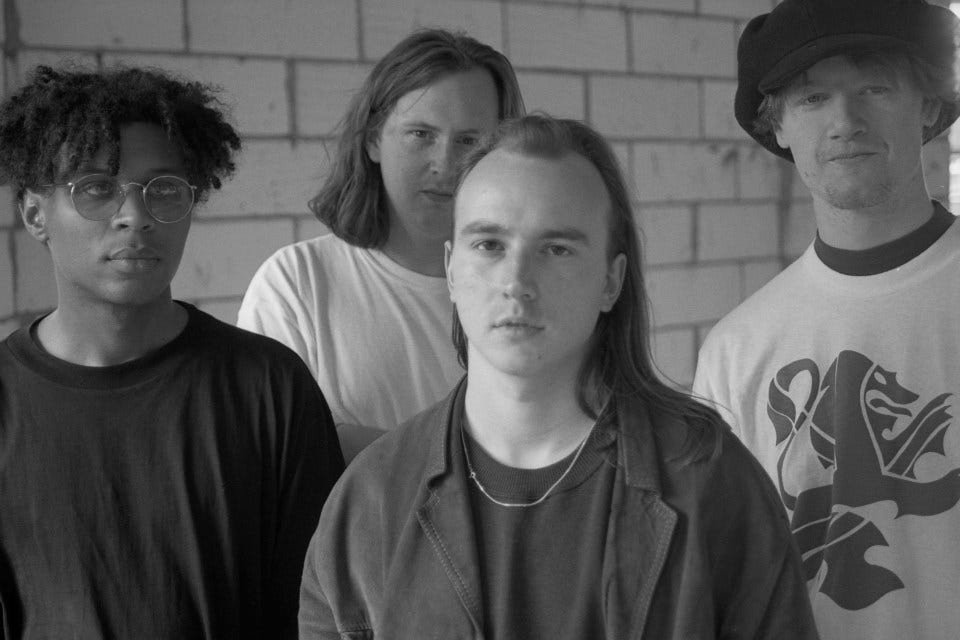
Of all the shoegaze bands to emerge from the UK in the early 1990s, an argument could be made that The Boo Radleys are the most overlooked. Rarely is the Merseyside band mentioned in the same breath as trailblazers such as My Bloody Valentine and Slowdive, other than in the history of Creation Records. And while it’s easy to call them one of the better Britpop bands, I’ve always felt they were one of the better shoegaze bands too.
Those days of shoegaze didn’t last long for the Boos or most of their peers. Come 1993, The Scene That Celebrates Itself was already becoming passé not just with the press - which had moved on to writing about grunge and a new homegrown brand of indie music - but also the musicians responsible for making it.

A number of acts associated with it chose to evolve beyond the behind the walls of sound. Ride turned into The Byrds then broke up; Moose went jangly; Chapterhouse embraced acid house; Slowdive dabbled with ambient before transforming into a dreamy alt-country band; and Lush became a chart-topping indie-pop group. But when it comes to any of those bands, their days as shoegazers is what they’re often remembered for most.
That’s not the case for The Boo Radleys. To most people, they are remembered for their association with Britpop, not shoegaze.
I don’t think anyone in 1992 would have predicted that the Boos would become the most popular band of the bunch, post-shoegaze, but it happened. Instead of keeping the melodies buried under layers of reverb and distortion, they followed their love of The Beatles and pursued a more pop-leaning direction through an experimental lens, where beautifully crafted melodies (and hooks, big hooks) were just part of a weird and wonderful journey.
With 1993’s Giant Steps, a bold and ambitious smorgasbord of psychedelia, dub, ‘60s pop, jazz, and yes, even a bit of shoegaze, The Boo Radleys not only beat the odds (and their unconvinced label boss Alan McGee), they eventually became one of the faces of the bubbling Britpop scene. Their next album, 1995’s Wake Up!, became a staple of the era, pushing them to the top of the charts (and Top of the Pops), and seeing them share magazine covers and TV appearances alongside England’s biggest bands like Blur, Pulp and Elastica.

The Boo Radleys’ story generally begins with Giant Steps and the success that followed in the mid’-’90s, while their formative “shoegaze” years are held to one sentence in most retrospective write-ups. I find it’s such shame too because there is plenty of music to discover before “Lazarus” made them indie darlings.
The band’s debut album, 1990’s Ichabod and I (released on Action Records), really was them finding their feet and mimicking their influences: pre-Loveless My Bloody Valentine, Sonic Youth and Dinosaur Jr. It’s rather hurried noise-pop that at times lacks in both focus and songs, but it did convince Rough Trade to sign them before the label was forced to shut down for a decade.
Their time on Rough Trade didn’t last long, but it did result in Learning To Walk, a stellar compilation consisting of the Kaleidoscope, Every Heaven and Boo! Up EPs. There is some solid stuff on that collection, including the band’s first display of amorous pop in “The Finest Kiss,” a proto-grungegazer called “Bluebird,” the MBV-esque “Forster’s Van” and a blistering cover of New Order’s “True Faith,” cheekily named “Boo! Faith,” which sounded eerily like Swervedriver’s Raise.
The Boo Radleys’ second full-length, Everything’s Alright Forever, however, remains to be one of my favourite albums of the original shoegaze era (and if I’m being honest, I’d likely take it over anything by Lush, Pale Saints, and possibly even Ride.) Their debut for Creation hardly moved the needle at the time of its release, but truth be told, it has never really found much of an audience the way other ’90s shoegaze albums have. Basically it’s one of the most slept-on albums of its time. And I get why it’s been overshadowed by the band’s albums that came after, because The Boo Radleys were an excellent Britpop band. But they were also a good shoegaze band too!
Everything’s Alright Forever is almost kept like a secret, even though the Boos shared a label with Slowdive, Swervedriver, Medicine, Ride and My Bloody Valentine, all of whom are regularly name-dropped as influences on newer bands.
What’s funny is that guitarist and main songwriter Martin Carr thought his band was the cream of the Creation crop, even though at the time they were clearly amongst the label’s second tier of bands.
“We didn’t think there were any bands on Creation that were nearly as good as us,” Carr told David Cavanagh, author of The Creation Records Story: My Magpie Eyes are Hungry for the Prize. “The Valentines had left. Primal Scream - we didn’t expect them ever to make a record again, for some reason. After Screamadelica I couldn’t imagine what they would do. And as regards Ride, I thought ‘Leave Them All Behind’ was terrible one-note rubbish!”
The cache of being on Creation has worked wonders for bands over the years, however, it’s done little to remind people of what the Boos achieved prior to Britpop. Back then, in a bid to build some hype for both the band and Creation, the label’s press officer purposely dubbed Carr “the new Kevin Shields,” for his keen sonic ear and sheepish demeanour.
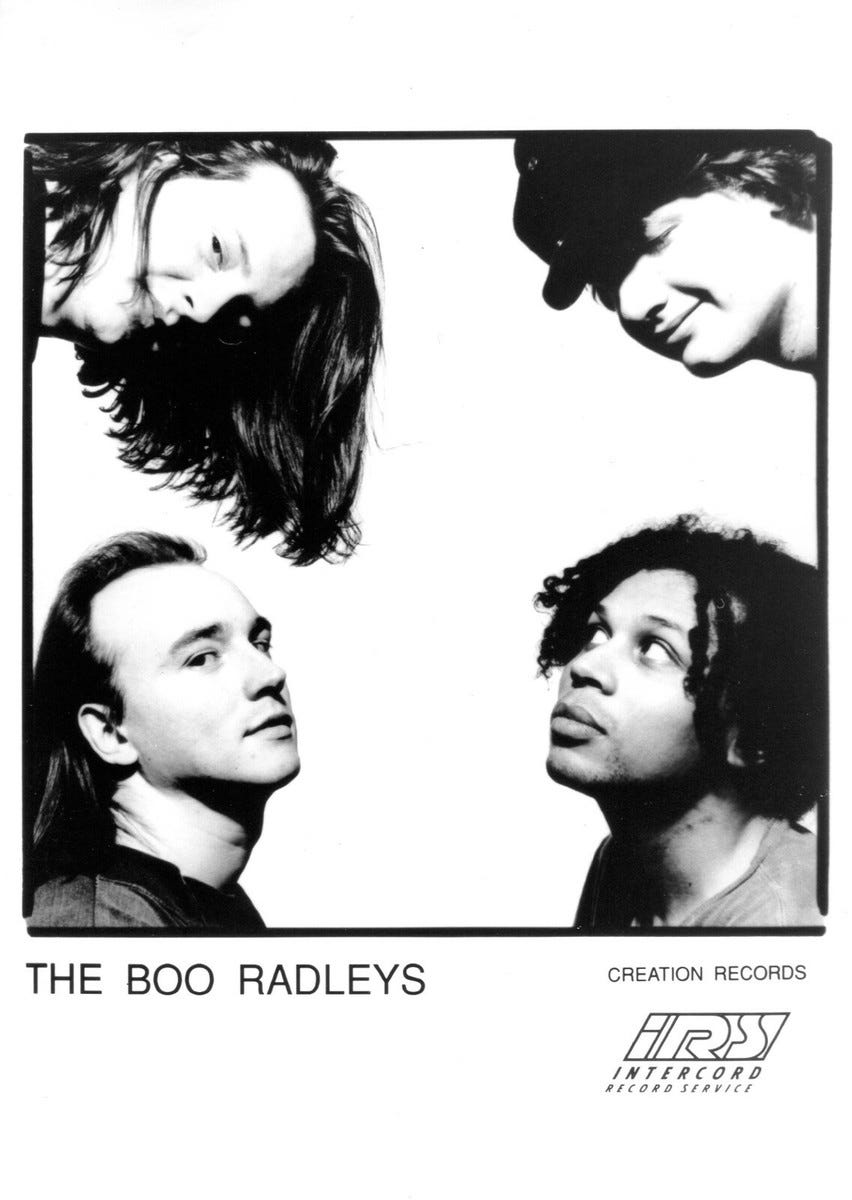
NME took the bait in its review of the album, paying a back-handed compliment to the band by calling them “a My Bloody Valentine Creation can afford.” Although it might not boggle minds the way listening to Loveless does time and time again, Everything’s Alright Forever is quite an inventive and tuneful shoegaze record compared to others both then and now. How many shoegazers made the decision to feature a Flamenco-inspired trumpet solo on the opening track of their album? That’s how the band chose to kick it off with “Spaniard,” a slow-burning intro that climaxes with a wailing turn by legendary trumpet player Roddy Lorimer. (Check his CV: The Rolling Stones, Blur, Spice Girls, Tom Jones, The Pale Fountains, S Club 7, Primal Scream and Mr. Blobby.)
Everything’s Alright Forever runs a tad long, but likely because it is full of so many ideas that translate into many high points. The enterprising, creative juices that formed Giant Steps, which many consider a true masterpiece, didn’t just come out of thin air. Second track “Towards the Light” is a nice, brief canapé of soft, fuzzy guitars that lead into a blistering Carr solo coda. It’s followed by “Losing It (Song for Abigail),” which spends its first half as MBV-esque ambient noise, before mutating into an affable pop ditty. They explore more noise on “Room at the Top,” channeling the clamorous droning of Flying Saucer Attack.
From there, the album begins to flex its melodic muscle. “Memory Babe” is a pensive love song, bolstered by a winsome chorus and spiralling, harmonic noise. “Skyscraper” is likely the truest example of shoegaze the Boos ever put to tape, with a traditional tempo, fuzzy guitars, and a bold Crazy Horse-ish solo for good measure. “I Feel Nothing” and “Song for the Morning to Sing” both foreshadow the more expansive direction they would pursue on Giant Steps, one that they were already contemplating as they were recording.
Carr would later tell The Quietus, “We said we weren’t going to do shoegaze anymore even before Everything’s Alright Forever. But we got a producer in, and that album ended up having a much more shoegazey sound than we’d intended or wanted. That was why we decided we were going to produce ourselves after that – no more producers.”
That producer was Ed Buller, best known for his work on Suede’s best albums, Pulp’s His ‘n’ Hers, as well as mixing Slowdive’s Souvlaki and engineering Lush’s second EP, Sweetness and Light. In many ways, he was the right person for the job.
Buller let them indulge themselves, but in turn managed to get two of the band’s best singles out of them. “Does This Hurt?” is arguably one of the most overtly emotional songs in the shoegaze canon. With its alluring melody and driving rhythm, it yanks the heartstrings with frontman Sice calling out to an ex that “you smashed your dreams and now you’ve taken mine.”
“Lazy Day,” meanwhile, could and maybe should have been saved for the Britpop years. Just shy of reaching the two-minute mark, Carr wrote a perfect guitar hook that challenges even “It’s Lulu” or “Lazarus” in an earworm battle. Brooklyn Vegan called it “arguably the best 94 seconds in all of ’90s shoegaze,” and I wholeheartedly agree. Clearly a sign of what was to come.
It’s also worth noting that the Boos recorded a handful of good-to-great B-sides around the same time. “Lazy Day” was the headline track on the four-track Adrenalin EP, which also includes the disorientatingly beautiful “Vegas” and “Whiplashed,” an indolent slice of shoegaze-pop that mushrooms into a colourful explosion of brass and woodwinds. “Feels Like Tomorrow,” though, is the real show-stealer; equal parts My Bloody Valentine’s “Feed Me With Your Kiss,” Blur’s “Popscene” and Nirvana’s “Breed,” it’s a scorching example of just how grunge-y the Boos could get. (No wonder they were invited to do Lollapalooza in the U.S.)
The Boo! Forever EP is also worth hunting down. Once again led by one of Everything’s standouts, “Does This Hurt?,” the midtempo title track waltzes along as Carr’s guitar builds up a burst of harmonious wonder; the swift “Buffalo Bill” is one-part pedal clamour, the other symphonic bombast; and “Sunfly II (Walking With the Kings)” sounds like a lost Chemical Brothers collaboration, packing big beats, flute riffs and zooming synths.
Naturally, The Boo Radleys felt they were better off moving on from being part of any shoegazing scene. Carr would tell the Creation Records blog, “I hated the term, I hated all of those terms and would have nothing to do with them. It would be an insult to lump MBV in with our generation of bands, who were pretty much MBV copyists. None of those bands, ourselves included, were a tenth as original as the Valentines.”
He actually found most of shoegaze to be an insult, and again, wasn’t afraid to throw some of his own at poor labelmates Ride. “My Bloody Valentine and Ride in the same sentence makes me laugh until milk comes out me nose,” he added. “I liked Ride up until the first album then lost interest, I like pop music. I loved Swervedriver, I thought they were one of the best bands on Creation.”
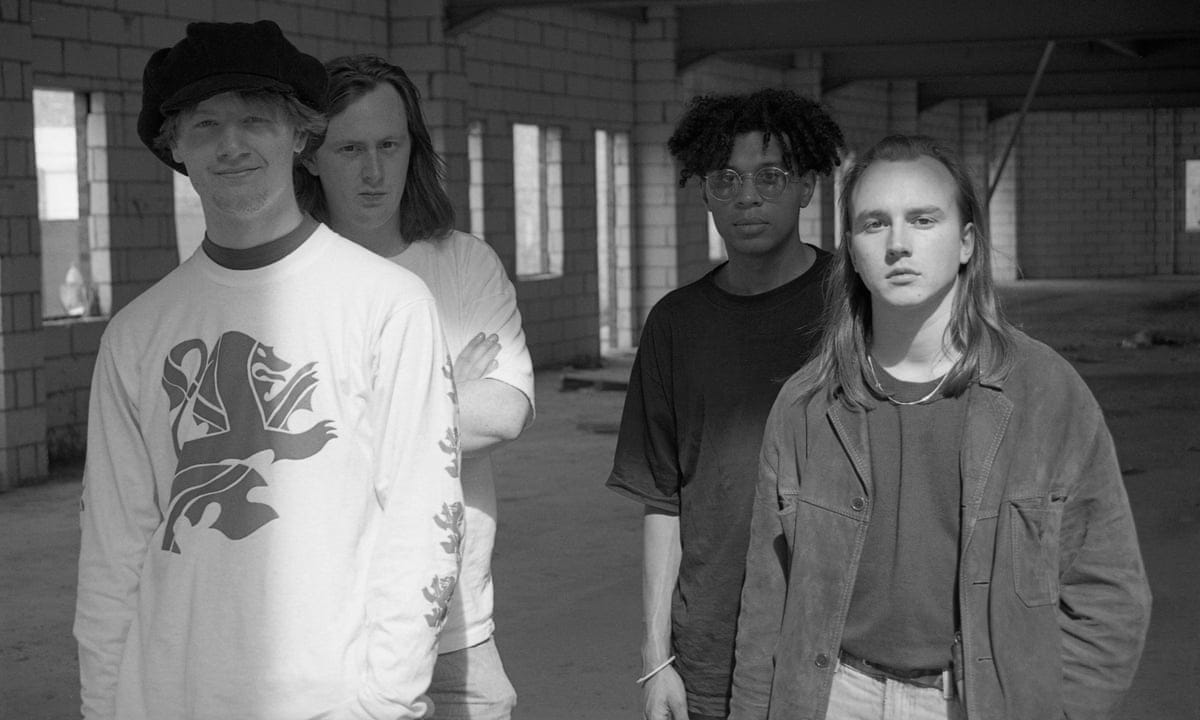
Interestingly enough, it was another underrated, ex-shoegaze band that exposed The Boo Radleys to the music that would go on to shape their future.
“When we were recording Everything’s Alright Forever, Moose, the band, were in the next studio. We used to hang out with them and they played us Pet Sounds. I’d never heard Pet Sounds before – I thought the Beach Boys were a joke,” Carr told The Quietus. “I just thought they were quite naff – fat guys in stripy shirts doing surfing songs, it just meant nothing to me. But Pet Sounds was amazing… Then I got a copy of Surf’s Up and that really did it for me. That was a big influence on Giant Steps – we were really into that album. That and Hit To Death In The Future Head by Flaming Lips, it was those two albums that really informed Giant Steps.”
From that moment on, The Boo Radleys transformed into a hit-making juggernaut, making themselves at home in the UK charts until they split up in 1999.
The band would reunite in 2021, though without Martin Carr - who chose not to take part - and have since put out three albums in the last four years. While they’ve leaned more towards melodic, quirky pop-rock, it’s interesting to see them revisit songs from Everything’s Alright Forever, namely “Spaniard” and “Lazy Day,” in their live sets. The band seems to have come to the realization that despite distancing themselves from that earlier material at points in their career, they wrote some damn good songs on that second album, songs people should know.
Does This Hurt? is such an undervalued banger
I'd like to add that in hindsight, I think 'C'mon Kids' is a also a great album, despite it basically killing their career. It's a little all over the place, but so was 'Giant Steps'!