

An interview with Mojave 3
As the band reissues their full catalogue, Rachel Goswell reflects on her time in Mojave 3, how they formed out of the ashes of Slowdive, and why she won't be writing the next great rock memoir.


The existence of Mojave 3 almost seems like a fantasy in this day and age. To think, Slowdive - now one of the most influential bands of their generation - broke up, and their two singers formed an alt-country band with their recently-hired drummer. I’m old enough to remember when it happened. But in 1995 things were very, very different.
When Slowdive disbanded, it surprised almost nobody. Some members had already checked out by the time they delivered their third album, Pygmalion, to their label Creation Records. The album wasn’t what Creation was looking for, so the label delayed its release by a year and immediately deleted it immediately after it came out on February 6, 1995. Then a week later Creation dropped Slowdive from its roster. One listen to Pygmalion and it’s quite easy to see why Creation wanted nothing to do with it. Britpop was flying high, Oasis were becoming the biggest band in Britain, and here was Slowdive, turning in a challenging, ambient-electronic record that was a year or so ahead of a movement it would have belonged to perfectly: post-rock.
By the time Pygmalion was released, Slowdive’s main singer and songwiter Neil Halstead had already moved on musically. He had already written music that was initially designed for Slowdive, but again very different. Focusing more on the acoustic guitar, Halstead was influenced by the likes of his new musical heroes Neil Young, Nick Drake, Leonard Cohen and The Byrds. He then invited Slowdive co-founder Rachel Goswell and drummer Ian McCutcheon to record some of the demos to see if they could make something out of these songs. And so Mojave 3 was born. (Originally Halstead wanted to call it Mojave, but the name had already been taken, forcing him to add “3”.)
The band’s debut album, Ask Me Tomorrow, was released eight months after Pygmalion by 4AD Records, whose Ivo Watts-Russell was a fan. Once described as “essentially Slowdive unplugged,” the album presented Halstead and Goswell’s intimate songs in a radical new manner; gone were the heavy use of effects pedals, replaced by softer, cleaner instruments such as piano, acoustic and slide guitar, and drum brushes.
Ask Me Tomorrow, however, was a one-off for this particular brand of Mojave 3. Come 1998’s follow-up, Out of Tune, they had transformed into a proper band, now incorporating a Hammond organ and Wurlitzer piano, trombone and trumpet, and the pedal steel of legendary maestro, B.J. Cole. As the album’s cover suggested, the band were leaning into a more laidback vibe; Halstead was exuding more confidence as a songwriter, finding a real knack for sneaking sunkissed melodies into tracks like “Keep It All Hid” and “Some Kinda Angel.”
Out of Tune established a mood and blueprint for the band moving forward, but each Mojave 3 album would offer something a little different from the others. On 2000’s Excuses for Travellers, they carried on the warm and fuzzy feelings with a little more of a subdued tone, focusing more on intimately-crafted folk songs. Spoon and Rafter (2003) saw them come out of their shells, growing more ambitious in the arrangements, dropping in Moog, banjo and harmonica to assist them in flirty with prog, country, ’60s rock, and for one brief moment, a section of reggae. By the time 2006’s Puzzles Like You dropped, Goswell was barely even in the band, despite her name in the credits. Halstead chose to turn what would be their final album into a high-spirited, “plugged” affair, with the fuzz pedals out and a desire to rock. There’s even a track called “Big Star Baby,” a fun romp paying tribute to one of Halstead’s favourites, the beloved cult band. (Halstead was on the record for saying there was going to be one more Mojave 3 album, but instead we were treated to a couple of solo albums.)
It’s easy to forget that Mojave 3 were active more or less for 18 years - six times as long as Slowdive’s initial run. They had their own fans, many who didn’t care about the band that came before Mojave 3. To many fans, they even surpassed what Halstead and Goswell’s previous band achieved in their time together (first time around at least).
And now we finally have all five Mojave 3 albums reissued together. The timing for this campaign couldn’t have come at a better time too. The past decade has seen Slowdive ascend to god-tier status, finally receiving the respect and adoration original fans always believed they deserved, while attracting new, young fans each and every day. With the albums once again available, Mojave 3 could follow Slowdive once again in finding a whole new audience they too deserved during their prime.

So did Mojave 3 ever officially break up?
Rachel Goswell: You know, it’s really funny because one of my best friends has just texted me and asked me that exact same question. But no, officially we didn’t break up, but I left maybe a year before Mojave 3 stopped gigging because I got sick. I got Labyrinthitis, which caused hearing loss in my left ear. I’ve got profound hearing loss in my left ear and tinnitus, and that happened right before the final record was released. I couldn’t walk in a straight line for four months and I had to have balance retraining therapy for a year. So that’s why I stopped touring with Mojave 3. I was just really poorly, basically. I physically couldn’t do it anymore and they got other people to fill in for live gigs for a bit, before they stopped.
When I spoke to Neil a few years ago, he mentioned 4AD were planning to reissue the Mojave 3 catalogue. How does it feel to have these albums finally reissued for the fans to own?
We’ve been working with 4AD for about two-and-a-half years now on this. So in the background, it’s been going on for quite a long time. Initially I don’t think I was aware that they were out of print because we’ve been doing Slowdive and not paying attention to these things. But then they messaged us whenever, maybe even three years ago, and said, “Would you be interested in doing this?” So it’s a nice thing to have them easily available for people, not at extortionate prices.
Seeing as all five albums are getting a reissue at once, is there one Mojave 3 release that stands out to you as the best, or perhaps just a favourite?
I think each record is different. You can kind of hear how Neil was changing what he was listening to and what was influencing him at the time. But I would say my favourite Mojave 3 record though is Out of Tune.
Right. That record marked a real tonal shift from Ask Me Tomorrow, which was very unplugged and mellow.
Well, the first record, those were sort of demos that Neil was working on in the interim whilst we were waiting for Pygmalion to come out. Because that took a year to be released. And he had already changed what he was listening to again by that point. It was a very, sort of relaxed recording, a different recording process for different songs. Some of it, like “Love Songs on the Radio,” the vocals I did in London sitting on a mattress, in this sort of second kitchen in his flat. It was weird. I still remember doing that, and then stuff like “Candle Song 3,” for example, was done in the studio. By that point, 4AD were already on board with us, so we had a bit of money to go in and do some recording. I remember Ivo sitting there listening to that for the first time.
I’m digressing massively, but for me, Out of Tune was a real sort of band record. We all played on it, we had the money to kind of go residential at a studio up in Glasgow and do some bits up there. I played a lot of the bass on that record, which I didn’t do on any of the others. It’s just more of a band vibe, and we had Tony Doogan producing, therefore, for me, it was a lot more fun. So that’s kind of my favourite.
By the time the third record came out, I was working a shitty full-time job in London. I had to go to work and then up to the studio in the evenings and it was really difficult. And that kind of continued really. For Out of Tune, the guys all shared a house in Cornwall, built a studio from a cow barn, because it was attached to farmland, you had like triple-glazed windows and we all painted it. Everything about that record was this real kind of cohesive band feel because they were all living together there. I was in London, but I used to go down there regularly and there was a lot of fun to that record.
How soon after Slowdive ending did you, Neil and Ian form Mojave 3? Did the three of you just decide to start a new band?
No. I would say because we’d been waiting a year for Pygmalion to be released Slowdive was very fractured. It wasn’t fun. Nick [Chaplin] and Christian [Savill], particularly, they’d had enough. Like me, they were also working in jobs by that point. It’s a running theme, actually, for most of my musical life up until the last decade or so. But Neil had just been working on this stuff, Pygmalion was released, and we were rehearsing to tour the album but then Creation literally dropped us a week after it was released. So then the tour got cancelled and we were like, “Well, that’s kind of that then.” I don’t really know how much time had passed. I don’t think much because Neil had been writing and working on these other songs in the background anyway. Like “Love Songs on the Radio,” “Sarah,” “Where Is the Love,” I think they were already done. And basically Neil said, “I’ve got these songs. Do you want to come and sing on them?” And I’m like, “Yeah.”
We still had a publishing deal with EMI so we had free studio time thanks to that, so we were able to do some bits in a studio in central London. I think I had a conversation maybe with Nick on the phone, after [Slowdive] had been dropped, and he was like, “Yeah, me and Christian are done. There’s just no point doing anything.” I was like, “Okay, fair enough. But I think me and Neil are going to carry on and see what happens.” Which is what we did. Ian had come in prior to Pygmalion coming out, and we just naturally carried on. We didn’t sit down and have this huge conversation. “What are we going to do next?” It was literally Neil saying, “I’ve got some songs. And we’ve got this free studio time with EMI. Do you want to come and sing on it?” And that was it. We were never much for massively deep conversations.
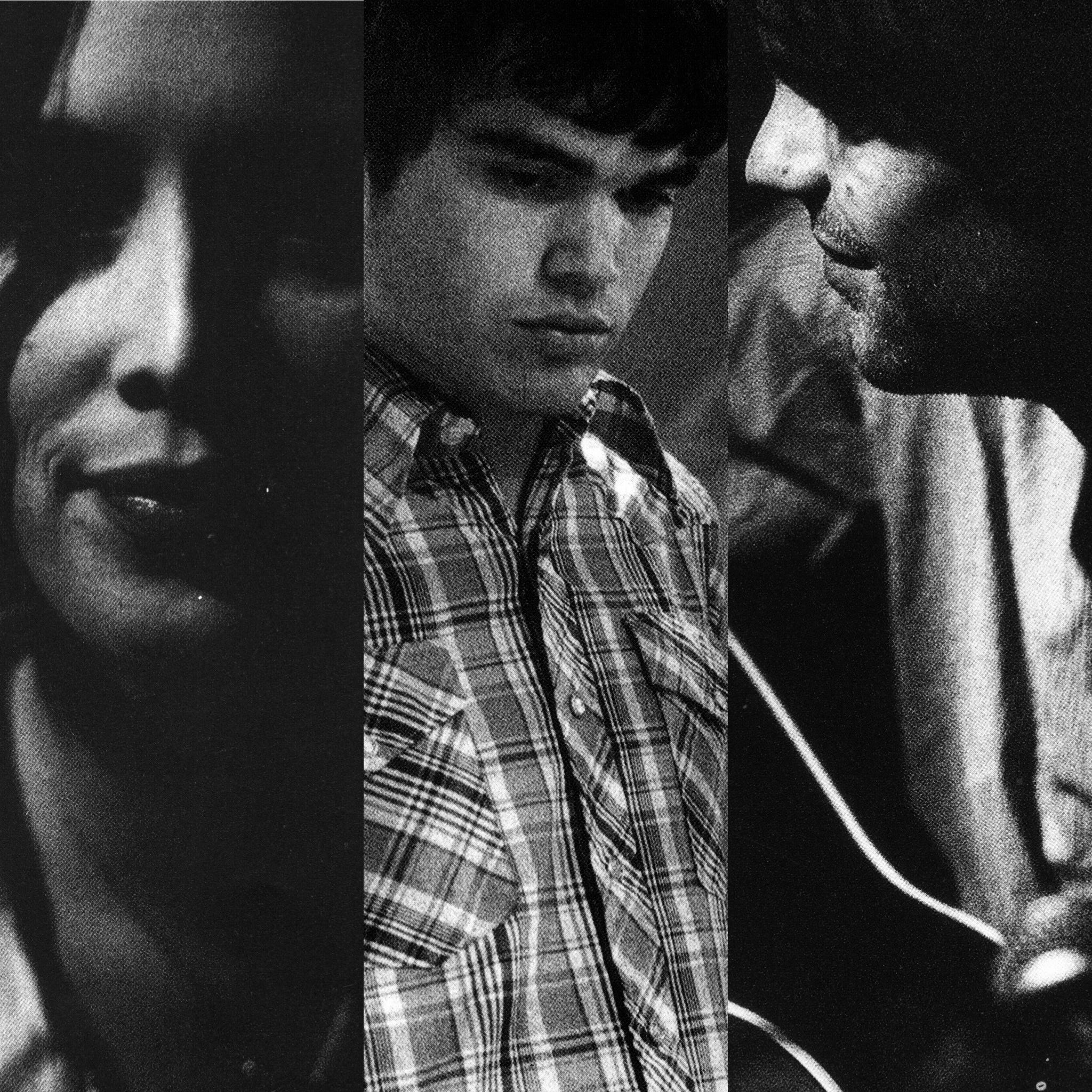
Compared to Slowdive, your vocals were up front, and quite naked in Mojave 3. As a vocalist, did that change anything for you, as far as having your voice more prominent?
I don’t think it did, other than the fact that obviously you could really hear the nuances in my voice that I hadn’t really been able to hear so much in the past. And it was nice for me. As those records continued to be released, my vocal contributions got less and less. As the band progressed, Neil was writing the songs, so he wanted to sing them, and that got difficult for me because what was the point of me doing it? So towards the end, by Puzzles, I was mentally checking out because I was frustrated at the lack of singing. But I certainly enjoyed being able to hear myself and realizing what I was capable of doing, I suppose, which with Slowdive I wouldn’t necessarily have realized.
You mentioned playing the bass. I was looking at the album credits, and it said you played bass on most of the Mojave 3 albums.
I definitely played bass on Out of Tune. I think I was just credited for bass on everything, but I don’t think I played bass on all the records. I think Neil did a lot of that. I played bass because Neil was like, “We need somebody to play bass, so Rache, you’ll have to do it.” That’s how that conversation went. I was like, “Okay.” But I did enjoy playing it. I think it’s quite interesting talking over the years to other bass players. A lot of people have said to me, “How could you play that and sing at the same time?” And that’s not anything I thought of, to be honest, because I had to do it - we needed somebody to play the bass. So that put a different spin on it for me. I did enjoy playing the bass in Mojave 3. I guess it always meant that on those moments where I wasn’t singing, I was playing the bass and had something to do. When you’re doing gigs. I do prefer playing guitar and keys though.
I think it was Sonic Cathedral who called Ask Me Tomorrow “essentially Slowdive unplugged,” when they reissued the album on vinyl back in 2017. But I remember early on that was pretty much how people viewed Mojave 3 early on. You said Neil had already started those songs while Slowdive was still going, so did you guys see the first album more as an extension of Slowdive or was it something brand new to you?
I think I’ve always said that had Slowdive continued, [Ask Me Tomorrow] would have been the next Slowdive record. But in reality, with Christian and Nick in the band, if they’d stayed in it, it probably would have sounded quite different to how it does. I think with them not in it, and Neil very much being in that singer-songwriter kind of approach to his writing, it was just a very different thing. So, Slowdive unplugged? Maybe. I can’t imagine Slowdive doing a song like “Sarah” or “Where Is the Love.” Even though, I guess some of the stuff Neil writes now are pop songs like “Kisses” and things like that. So, I suppose those elements do still kind of weave through everything he’s written over the years.
Around which album did people stop bringing up Slowdive?
Honestly, I can’t remember. I mean, Mojave 3 was such a different band. We had Simon Rowe and Al Forrester in the band as well, both great musicians. By the second album they had brought completely different things to the music, and I don’t think the bands are comparable in that sense. Naturally Slowdive would be mentioned with the first album, definitely. Second album, maybe, but by album number three I think there was probably no point because it was just back history.
Why do you think Mojave 3 lasted so much longer than Slowdive did in their original run?
Well, Mojave 3 certainly didn’t have the hard time that Slowdive did in the press in the UK. We toured extensively in the States, like every record, pretty much… I don’t know about the last one because I wasn’t in the band by then. But Mojave 3 did a lot of touring and we signed a five-album deal with 4AD as well. They were still happy to keep picking up the options on the records. I think there was enough contentment there within the band, between the people in the band, that people still wanted to continue to make those records.
You mentioned touring. I saw Mojave 3 support Lush in Toronto on the “Shaving the Pavement” tour in 1996, which also featured Scheer. I thought it was so cool to see all of these 4AD bands play together on one bill. What was that tour like for you?
That was a lot of fun for us. We really enjoyed it. We were sharing our tour bus with Scheer, who were a little bit younger than us but great fun. I think my overriding memory of that tour was generally that it was fun. At the beginning of that tour, though, prior to coming out I had been having really debilitating anxiety and panic attacks. Another ear thing. It stemmed from my ear bursting on a plane whilst on a press trip for Mojave 3 for that first record. It was in the States actually, between New York and L.A. They landed the plane in Denver and made me get off with our manager because my ear was bleeding and everything, it was awful. But after that press trip, I stayed in Denver for a week and then was cleared to fly to Europe to start a Mojave 3 tour. But I was really unwell with what was going on. It was causing balance issues and all sorts of things. Same ear as well! When I got home from that tour, because I didn’t understand, I thought I was having a nervous breakdown because I started to have panic attacks out of nowhere. I’d never experienced them before. Obviously I went back to the doctors and they diagnosed me with post-traumatic stress disorder.
Anxiety and panic attacks literally plagued me from then, when I was 25, on and off, up until the age of 45? At the start of that tour, my husband at the time - no longer my husband - he actually came out on that tour with us because I was still so debilitated by panic attacks that I didn’t think I could do the tour. So he came to chaperone and to look after me. So initially, it was difficult being back out and doing things, but ultimately I enjoyed it. We were out for quite a long time, five weeks or something. It was a long tour. I think by the end of it I was enjoying it. Gosh, there are all these things I hadn’t thought about for years that are triggering these memories. I forgot that happened!
Speaking of Lush, I interviewed Miki Berenyi a couple years ago for her memoir, and she said you helped convince her to reform Lush ten years ago or so. That got me thinking: do you ever see yourself writing a book like Miki did?
I have thought about it in recent years, and I have been approached by some people to write. However, unlike Miki, I didn’t keep diaries. So, my memory is pretty shot of the ’90s and a lot around that time. So for that reason, I would really struggle to write anything completely honest and meaningful because I would have to rely on other people to fill in the blanks for me.
Slowdive have grown so much in popularity over the last decade. Every time I go to a record shop some young person seems to be holding a copy of Souvlaki under their arm. What do you think caused Slowdive to go from a cult band to this highly influential band that has this ever-growing fanbase and is widely considered the face of shoegaze?
Just the internet. Even prior to TikTok, you had MySpace. Funnily enough, I’ve just seen on Instagram today Adam [Franklin] and Jimmy [Hartridge] from Swervedriver were talking to Brooklyn Vegan about how shoegaze was on MySpace as a genre way back when. I remember laughing at times thinking, “Oh, that’s just ridiculous.” It was kind of bubbling away in our absence, obviously, and then it just grew and grew. And, of course, you have TikTok, which I don’t go on. I think it would do my head in.
When I spoke to Stephen Patman of Chapterhouse a couple months ago, he explained that “shoegaze” was used as a derogatory term by the UK press, which none of the musicians involved liked. But now bands embrace being called shoegaze. And not only is it considered a genre now, it has its own subgenres that sound nothing like the music that Slowdive, Swervedriver and Chapterhouse were making. It’s so interesting to see it evolve.
I think it’s fantastic. The kids have basically owned it and flipped it on its head. Sometimes it’s a very strange thing thinking about it and where we’re at now and meeting younger people at shows and other people in bands. I guess Souvlaki was written when we were 22 and maybe those songs resonate with young people for that reason. For the latest Slowdive albums, obviously we were a lot older, yet we still get loads of kids at our gigs.
When we released the last album, we had an email from a 16-year-old in New Zealand saying, “I think it’s really bad that your gigs aren’t open to all ages. Slowdive is my favourite band and I really want to see them. And they’re coming to New Zealand. And they probably won’t come again. They’ll probably die because they’re so old.” That comment made me chuckle. But it was at that point that we opened all of our shows up to all ages, everywhere we play as far as we can. If the venues can do it, then we do it. But yeah, there have been some really young kids at our gigs. I saw a 12-year-old in front row and their head was only just high enough to see over the barrier in front of me. I’m just looking, going, “Jeez, you’re so young!” And I always think, these are some cool fucking parents bringing their kids to these gigs. I wish mine had done that.
And the younger people don’t care about how old the people in bands are. The ageism exists maybe more in people of our generation. I don’t know. But in music, I don’t think it really exists amongst young people. Aside from the comment, “Oh, I need to see them because they might die!”
What do you have coming up next? Is there any new music coming from Slowdive or even Minor Victories?
There’s nothing to share with Minor Victories. I’ve seen Stuart [Braithwaite] quite a lot this year and we might actually shoot off and do something different at some point. Who knows? But with Slowdive, we’ve still got some gigs this year and we’ve just announced an Asian tour for December, drip by drip, as they do these things. Originally this year was going to be our year off because we worked really hard the last couple of years with touring. We’ve been away from our families a lot. But then basically those gigs with The Cure came up this year and we were like, “Oh, we’ll do those! That’s fine. Thank you very much.” Then we did a few handful of gigs in China in April, and then we were kind of bookending the year with a few different countries around Asia. Other than that, the future’s wide open.
We haven’t sat down and discussed another Slowdive record. I think the desire is there to do it. How long it takes is anyone’s guess. We seem to average three years. Neil is the primary songwriter, so I guess a lot of it falls on him and his creativity and when those things start popping into his head. But for now, we’re just enjoying playing a few gigs and getting a better work life balance. We actually enjoy playing live, which helps. I love going out and doing gigs. But none of us would want to do long tours anymore. As you get older you just don’t want to be away from home for weeks and weeks at a time. But it’s certainly lovely to go out and do gigs to stay connected with people.
Are there any plans to perform as Mojave 3 to promote the reissues?
There are not any plans, no.
Well, it’s been awesome talking Mojave 3 with you. Those albums mean so much to me and so many others. The one thing I wanted to add was when Out of Tune came out I was in university, and I briefly hosted a radio show. On one show I dedicated “Some Kinda Angel” to the girl I was dating at the time, who’s now my wife of almost 20 years. And that song was played at our wedding, so it means a lot to us.
Oh, that’s amazing. I love that song. It’s really funny. My memories of when we were recording that song, that was done on in the house when the guys were living in Cornwall, in the little converted cowshed. I think I waited literally all day and half the evening to do my vocals on that track. I was getting really kind of pissed off because they kept faffing around and Neil was taking ages doing vocals and tweaking things. And by the time I went in to do my vocals, it was literally done in one take, because I’d heard it so much and it’s such a great tune, such a great pop song, that I went in and did it. When I came out they were like, “Jesus, Rachel, I think you got it!” So, I have very fond memories of that song and that album.