

An interview with deary
The English dream pop trio talk working with "Simon from Cocteau Twins," the importance of adding a drummer, the majesty of seabirds, and why full-length albums still matter.

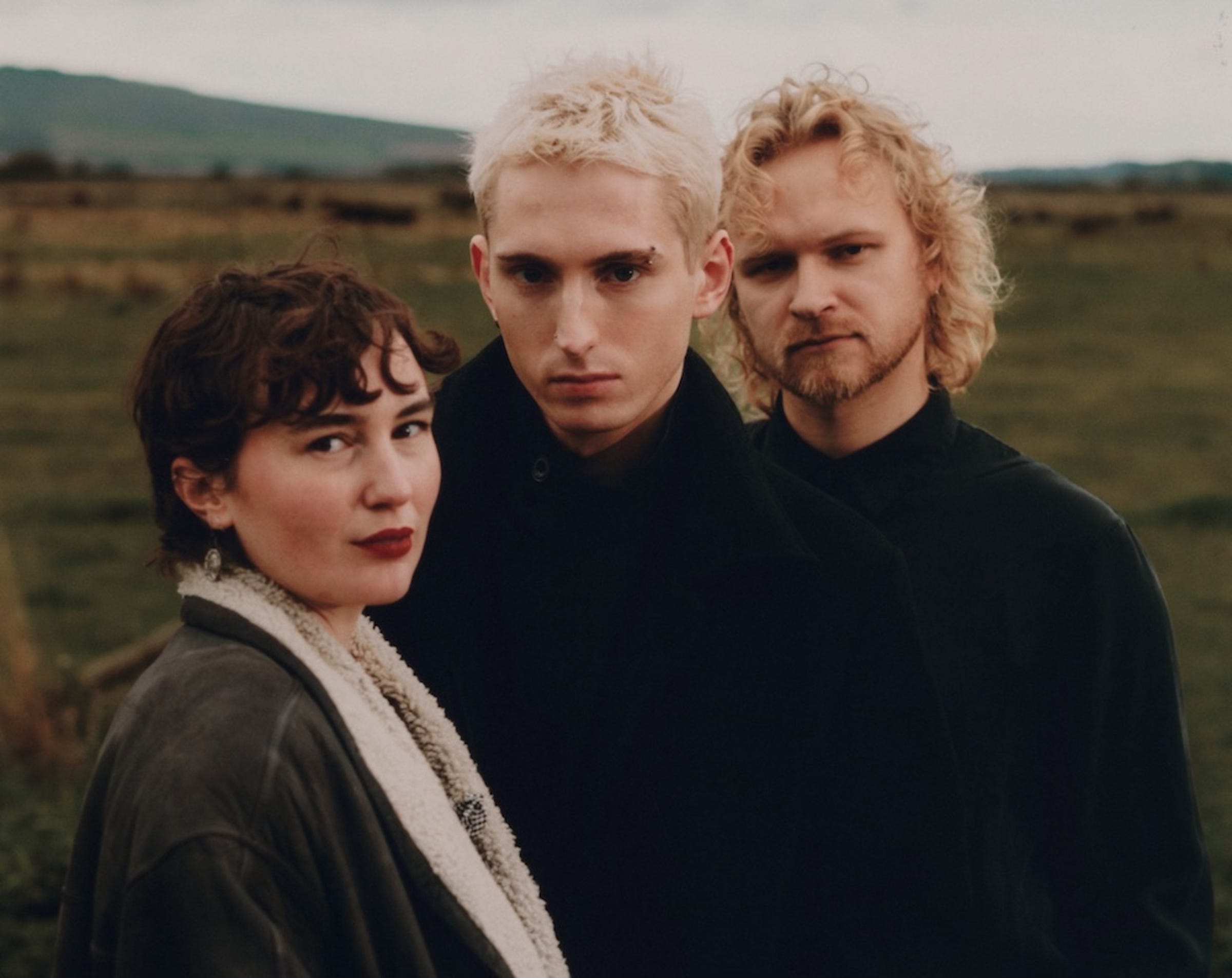
There will never be another Cocteau Twins. No other voice will ever sound “like God” the way Elizabeth Fraser’s did. No guitar will ever reverberate as divinely as Robin Guthrie’s did. But that doesn’t mean there aren’t worthy successors out there who can carry the torch the Cocteaus lit decades ago.
London’s deary are a perfect example of a band taking cues from Fraser and Guthrie, while also charting a course of their own. Like Cocteau Twins, there are three of them, they make truly celestial dream pop, and their music feels very much its own thing at the moment. It just so happens that their new label boss is Simon Raymonde, former bassist of the aforementioned legends.
Formed by guitarist/producer Ben Easton and vocalist Dottie Cockram in 2021 amidst the COVID lockdown, the then-duo signed with the esteemed Sonic Cathedral label and released a handful of EPs and singles that quickly made them one of the most exciting UK bands in the recent shoegaze/dream pop explosion. Originally relying on a drum machine, they added Harry Catchpole as their permanent drummer, giving the band a more human element leading up to the release of their debut album.
Jumping ship to Bella Union (where Cockram also works as an admin assistant), deary sure feel like they’re in a prime position to make the most of the opportunity. The album, Birding, fulfills all of the promise their previous releases hinted at, while serving as a more complete statement of the artistic leaps they’ve taken. A sprawling tapestry of halcyon-inducing dream pop, it excels thanks to Cockram’s voice, which has its own beatific lure to it, Catchpole’s more organic rhythms, and Easton’s shimmering guitar reverberations - all of which join forces to conjure music that transcends beyond the heavens.
While dream pop is a term thrown around and mis-labelled quite a bit these days, Birding is quite possibly the finest, purest example of the genre we’ve been offered in recent memory.
The album is called Birding. I have some family members who go bird watching. Are any members of the band bird enthusiasts? Where did the title come from?
Dottie Cockram: I think it was mostly because I was spending a lot of time thinking about birds. I wouldn’t necessarily say I was watching them as bird watchers do. I’m not that tuned into what every species is. I can just about name some local birds. But I recently moved to the seaside, so I’ve been sitting on the beach a lot whilst we were writing this album, trying to find some inspiration or just trying to take a bit of time out of my life, just to stare at the sea. There were a lot of seabirds around and I think I just got a bit taken away by them, their majesty and their brilliance. But also the kinds of things that make them animals as well, you know, the negative things as well as the positive things. I was talking to Ben about it and he said we should really use this as an influence for the album. So I brought loads of poetry books and loads of books about birds and I just kind of got invested. And it really inspired us for the album.
You guys decided to become your own producers for this album. How did you find that process? And how much harder was it to make all those decisions when everything’s down to you instead of getting outside help when you need it?
Harry Catchpole: A lot of the production was done in a big chunk of days near the end with Iggy B, our friend who he helped us with the production for a lot of it. But we had a lot in mind that just came along during the process. Obviously we laid all the drums down first, so I kind of had skeletons of tracks to work with, but a lot of it just developed all the way throughout, which was really fun. And it just came sporadically while we were in the studio, even just looking at instruments across the room. There were engineering choices made then and there, like a snare lying on the other side of the room that we just picked up and said, “Yeah, let’s just use that.” We were really happy with how it turned out. It was super collaborative. We were all in one room in The Crypt and just got a lot of it done there.
Dottie: Ben is an absolutely amazing producer himself and he does a lot of our demos. A lot of people always say, “These demos just sound complete already.” He’s got such an amazing ear for this kind of music and building up so many beautiful layers of guitars, and me sending vocals and him really making the piece become something amazing and something that is our sound. He and Iggy have such a great friendship. We wouldn’t be sounding like we do without Ben and Iggy working together, definitely.
Previously, you released EPs and singles. What made it the right time to put out a full length at this point?
Dottie: I think we’ve been thinking about it for a while. We intended to do an album a bit earlier, but I think it just didn’t feel right. I think we came into it because of the way the band started during lockdown, where me and Ben couldn’t actually meet up and play together. So we were sending ideas back and forth, but we needed to play these songs live, to play together and learn about our relationship with each other. Then we met Harry and it’s been a slow development. I think we needed that time to make music, share it and write songs we didn’t like, write songs that we love, and just get to a point where we know that we were going to write an album. We just needed to get to the right place, I think.
In the streaming age, there seems to be two camps right now: one that still believes an album is an artistic statement, and one that feels releasing singles and EPs are more effective because they take less time to get out to the world. Where do you stand on this?
Harry: I think an album’s a big statement. It’s a big world builder. I think it allows more time for a world or a concept to be built, even if it’s not conceptual, you know? I think it’s a much bigger statement. There’s a lot more time to work on things. I don’t think an EP is as simple as getting a couple tracks together and just shoving them out on as a release. But I think an album is more artistic and you have more time to make a statement, like I said.
Dottie: Streaming has had such an impact on the industry and how we listen and how digestible things are. I just love listening to an album, beginning to end, and being encapsulated in something that these people have built a world around, like Harry was saying. Having a good hour of being in this place where you’ve got a soundtrack that’s all the same. I think that’s really special.
Musically, was there anything you were consciously trying to do differently from what you’d done with the EPs?
Dottie: Harry’s drums are quite a big change because before we didn’t really have an in-house drummer. We worked with samples and we had friends come in, like the amazing Simon Scott [of Slowdive] play on our last EP. So to actually have a drummer that we could take these ideas to, and Harry spent so long building up these drums and being really specific about the sound. I think it’s made a massive impact on us as a band, and as the album in general just has a bit energy, and a bit more depth to it when you have all these really beautiful sounds and intentional moments.
There are new sounds on this record. “Gypsophila” for instance, is a straight-up ambient track, while “Garden of Eden” is more acoustic-based. Did making those artistic leaps feel like the band was consciously trying something new or was the process more organic?
Harry: I think “Garden of Eden” fell into place really well, to be honest. It made perfect sense and I know Dottie put a lot of work into it, but it came about really quickly. We were set on something like that from when we had a discussion while we were staying with Simon and Abbey [Raymonde] in Brighton. It made perfect sense to us. I know it might seem a bit different, but there are tracks from before that feel like cousins to it. I know it’s an acoustic, Dots-only track, but I think it works really well. So it doesn’t feel like that much of a jump. Something like “Gypsophila,” I think it’s really cool, but again, as Dottie said earlier, Ben just got it done and we were so on board with it. So it wasn’t a conscious jump for us, and I think if it sounds like a natural development, not a forced one to a listener, then that’s a really good thing.
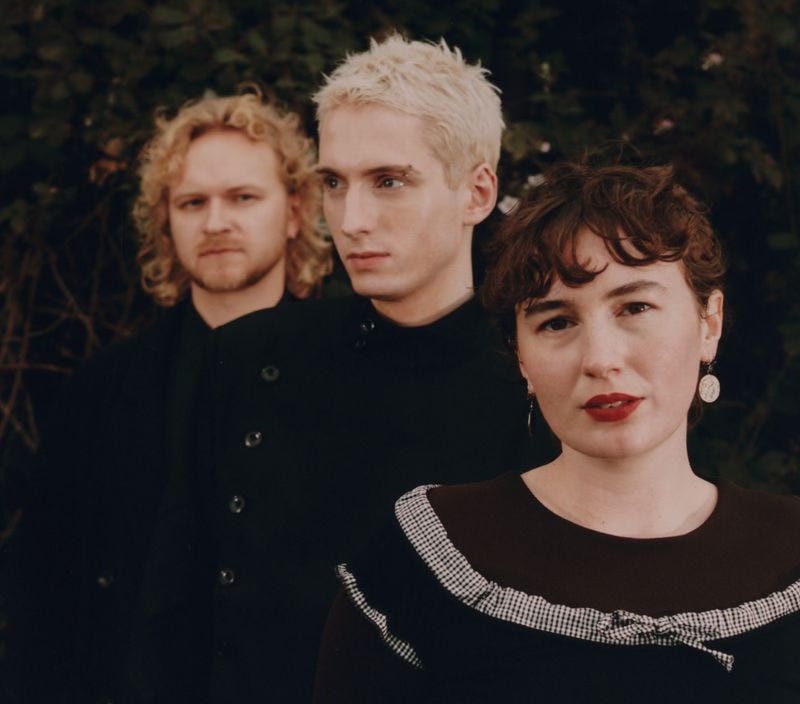
I first learned of deary when you signed with Sonic Cathedral, one of my favourite labels. I interviewed Nat in 2024 for the label’s 20th anniversary. What did being a part of his label and that community do for the band?
Dottie: I think it was so influential to us to be a part of that. It’s such a strong community that really cares about the artists and comes to every show, buys all the merch, buys all the records and helps these small bands and these small labels be able to do what they can do. I could tell that everyone of them trusted Nat to pick the next great band. That sounds really smug, but they really do trust him to find amazing musicians to join in. I think we were so lucky to find Nat and be able to be a part of that because being in a band is really tough, especially when you’re starting out. To be able to fund, even put our first EP onto vinyl is such a privilege to be able to do. We couldn’t have done that without Nat and his amazing community.
Moving from Sonic Cathedral to Bella Union feels a bit like a graduation of sorts. From a smaller indie label to a much bigger one. What brought on that decision?
Dottie: It felt very natural. We started working with them. How did it happen? This is Ben’s territory. I think Simon reached out to us online or something and we just started talking to him. I think he liked one of our Instagram posts and I remember me and Ben messaging each other like, “Oh my God! Simon from Cocteau Twins!” Because we’re obviously massive Cocteau Twins fans. We couldn’t believe it. But we met up with him and had a drink, and he was just like, “Is there anything we can do to help? It would be great to work with you.” And it just kind of happened.
So it was a big deal for you to meet him and to join the label?
Dottie: Yeah, absolutely. It was amazing. I remember walking to go meet him in King’s Cross and it was so rainy. And I really don’t like King’s Cross because it’s so busy. And I was just really nervous because we were meeting someone from one of our favourite bands. But it was just so easy. I think he brought me a piece of cheesecake and we had a beer; it was just really nice. You just have to remember that these people from these amazing bands are just people who were in the same place as you at one point. He’s just really supportive and kind. He and his wife Abbey have been amazing.
Have you read Simon’s memoir?
Dottie: I have, yes. Have you?
Yes. I interviewed Simon a few years back for a piece on Milk & Kisses turning 25 years old, which felt like a good lesson on what not to do when you’re a band. Maybe it’s too early in the relationship, but has Simon imparted any of his wisdom to the band yet?
Dottie: Yeah, he’s been really helpful with me with my vocals, because I’ve got quite a delicate voice amongst very loud guitars and loud drums. I’m also quite a nervous performer. And he spent a lot of time with Liz, and she obviously has a gorgeous, gorgeous voice. He told me about her nerves and how she dealt with it, and how to become a better performer. One time we had a pretty bad show in Brighton and we stayed with Simon afterwards, and we were all feeling a bit rubbish. But he told us that no show is ever going to be perfect. Like your guitar amps are going to go a bit crazy or the mic will cut out, but that is just the beauty of live music. And it just made me feel good, hearing that from someone who was in such an amazing band. People don’t think about their bad shows or when they hit a bum note, they think about this iconic shoegaze band that absolutely changed music in the ’80s and ’90s.
Speaking of Simon’s old band, you and Ben made the decision to attempt something Cocteau Twins never did: add a full-time drummer to the line-up. What made it the right time to bring Harry into the fold?
Dottie: What made the time right? Ben and I always had the idea that we would be a songwriting duo, we would be deary, and then we would have live musicians to help us play our music. We were looking for a drummer to play live because our other one left, and we found Harry. He just had this amazing style. I think you were covering a Beach House song, Harry. Is that right?
Harry: I was, yeah. I was doing a Beach House cover and then some jazz bits as well. But Ben reached out to me. I was moving down to London at the time because I was in Manchester before. And everything just lined up really well and catapulted a bit after that. Things just worked out for us quite naturally. We weren’t too sure of how the dynamic would be at the start and we were all fine with whatever. I think the two of them felt the time was right, and they said, “Let’s just do it as a three. I think this makes sense.” And it worked.
Dottie: I think you started playing the Aurelia EP songs with us. And then we thought you brought so much to those songs that we couldn’t bring, because we’re not drummers. Ben’s obviously an amazing musician, but we can’t hear drums like Harry does. So, we thought it would be an amazing step up for us to be able to have a drummer come into our little family and help us hear these things.
Harry, how familiar were you with the music Dottie and Ben were making?
Harry: I think maybe “Fairground” had popped up on the radio, but I knew this is super my stuff. I wanted to do a project like this for so long. When they reached out, I thought it was a spam email. So I think I ignored it for a month or two. It seemed so dodgy. But no, I wasn’t that familiar really. They sent me “The Moth” and I think “The Drift” to see what I would do with them. They weren’t even out yet, so there wasn’t a huge amount of stuff out on Spotify. I wasn’t that familiar, but God, I’m in deep now, aren’t I?
You mentioned “The Moth” and “The Drift,” both of which have pre-programmed drums on them. Harry, what was your approach to playing those songs live?
Harry: I find real joy in trying to perfectly emulate a live version of them. I can add my own bits, like getting a little snare to make it sound like “Fairground,” or I play it note for note where I can. We have pads and electronic stuff involved, but a real beefy kit hits better live. A lot of it is as best a recreation as I can, really. But I want to start exploring and incorporating more of that into the set, like a blending of real and machine drums. Because I think that’s so much fun to toy with.
In the bio, it mentions that after bringing in Harry, you needed to stop following roadmaps and decide on how you wanted deary to sound. What was that discussion like?
Dottie: We have quite an array of influences between us. Like Harry and I really love Big Thief and Adrianne Lenker, that kind of minimal, folky, spooky kind of music. But we also love Massive Attack and Portishead and these really dynamic, eerie, beautiful pieces of music. I think it’s just a way of us trying to have all that, but then still be something that we’ve worked on for a really long time. I remember being in the studio and we were going through the songs and a lot of them seemed to end on this big crescendo, like this big shoegazy, loud ending. And I turned to Ben and Harry and said, “We have to really think about where we want to take these and if it’s right for the song or if we’re just trying to follow things we’ve heard that inspired us.
Harry: Like “Terra Fable.” Near the end, we were toying with this idea of following where our minds wanted to go, which is up in this big crescendo. But then we said, “Let’s not go with that. Let’s just try and not really reach a conclusion.” It’s just kind of floating as an idea, which we thought was something really fun to do. It’s not this big obvious crescendo and we took a bit of time to think about it. Dots had a go in her own way at the idea in the nicest, friendliest way possible. It was when we were at Simon’s studio, wasn’t it, Dots?
Dottie: Yeah. I think we’d all been working so hard on the album and when you do something big like that, you can get a bit lost in it. Like, “What was that first song I did? What was that thing we did yesterday?” It becomes this big blur. We were sitting and listening to all that we had and trying to think of how we could make this something that we really love and how to make this ours.
That song “Terra Fable” basically ends with a fade out, which was such a popular choice for musicians and producers in the ’80s and ’90s. Is that a thing anymore, just fading out a song to end it?
Harry: I love it. I’m going to do that all the time. For the next project for sure we need more fade outs.
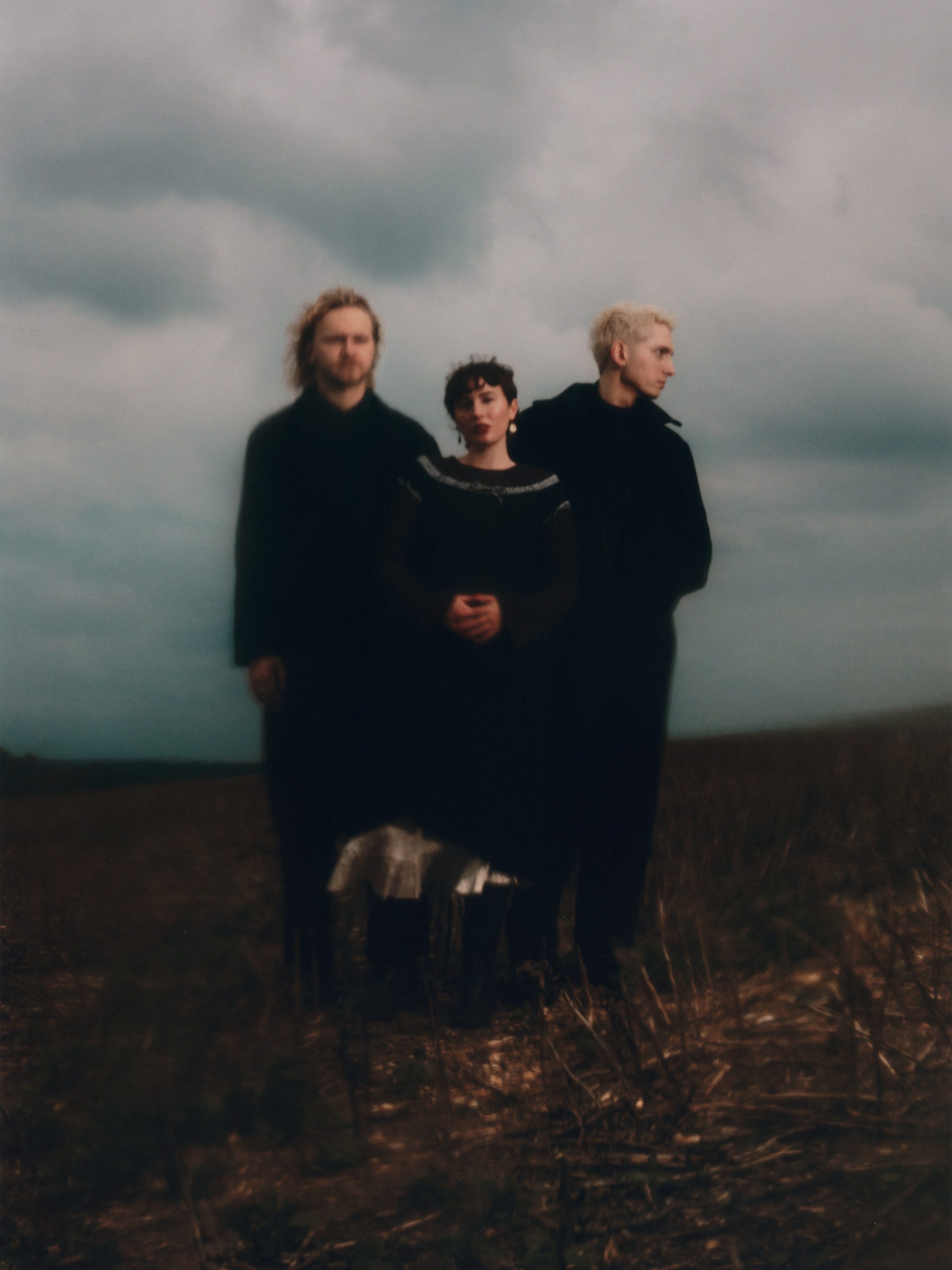
I mostly write about shoegaze and dream pop. Do you feel like deary is a part of those communities?
Dottie: Yeah. I think it’s amazing. I think there’s been such a great resurgence over the past couple years of this sound, maybe started loosely by Beach House and this kind of dream pop world, which slowly got a bit more distorted and louder. There are these amazing bands at the moment, like Just Mustard and Whitelands, who are both incredible and we love them.
That whole shoegaze and dream pop scene began in the UK, but now it feels very international. Does it feel like there is a scene or community for that music where you’re located?
Harry: Yeah. It’s everywhere. Obviously there’s Whitelands, who we are on Sonic Cathedral. They’re killing it. They’re smashing it. They’re doing great. I don’t know about straight shoegaze, but it’s bled its way into a lot of UK artists, even if it’s not as noticeable. Like TTSSFFU, who I know from Manchester. You can feel it going through everything at the moment. I feel like it’s got its pulse on everything. I don’t think it’s just a trend. I don’t know. I think there are people who could probably explain it a bit better than me, but it’s everywhere here as well.
Thank you for introducing me to a new band today!
Lovely! (We did have a live drummer for a few years at the end there but a lot of people maybe don’t realise that cos there isn’t much footage of us!) great piece thanks so much